Floating Access Bridge & Walkway Hire
Temporary access routes across water for construction, maintenance and infrastructure projects across the UK.
Temporary Floating Access for Construction & Maintenance
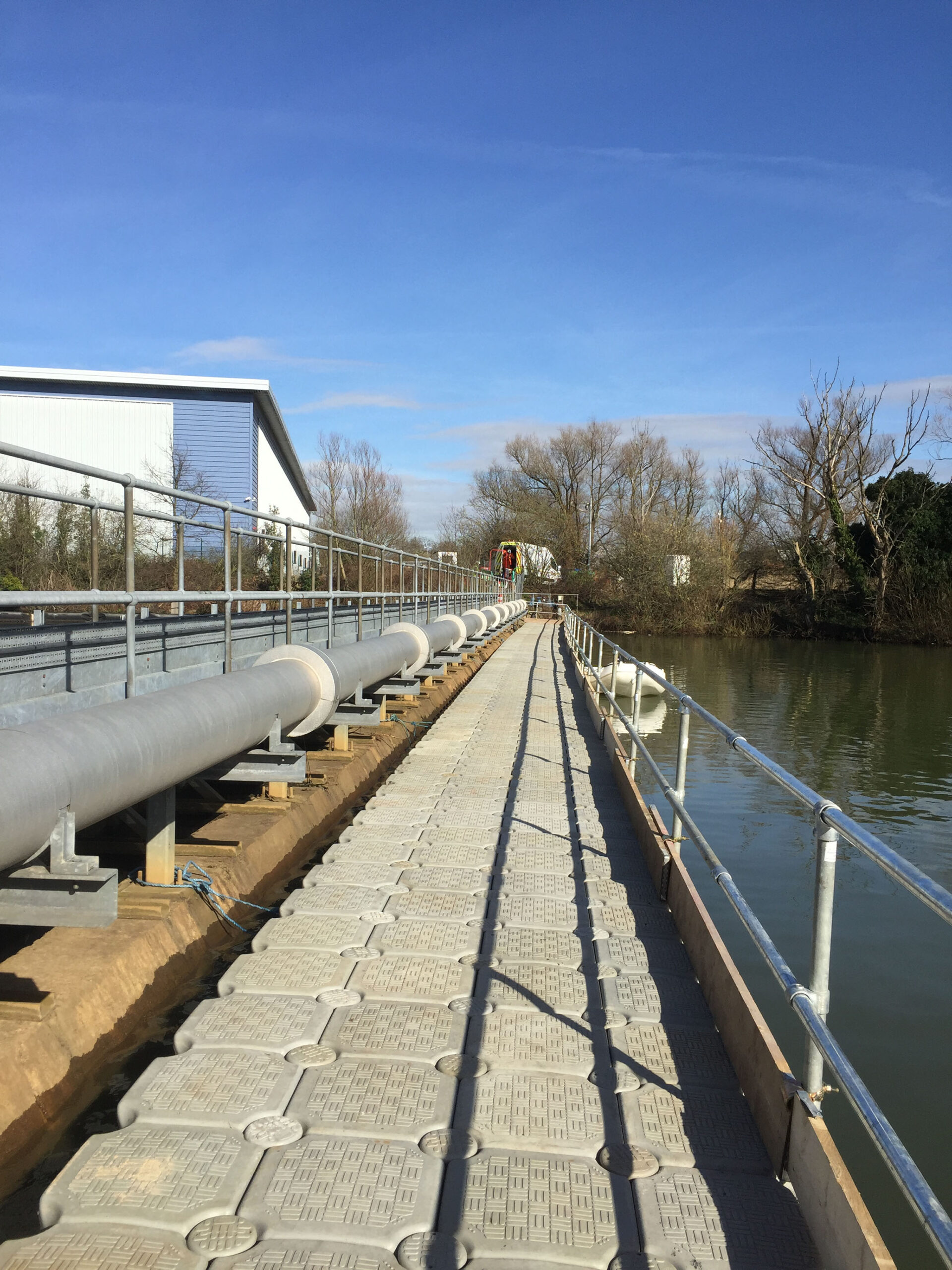
FPS Pontoon Hire provides modular floating walkways and temporary floating access bridges for contractors, infrastructure teams and maintenance projects where safe access is required across or alongside water.
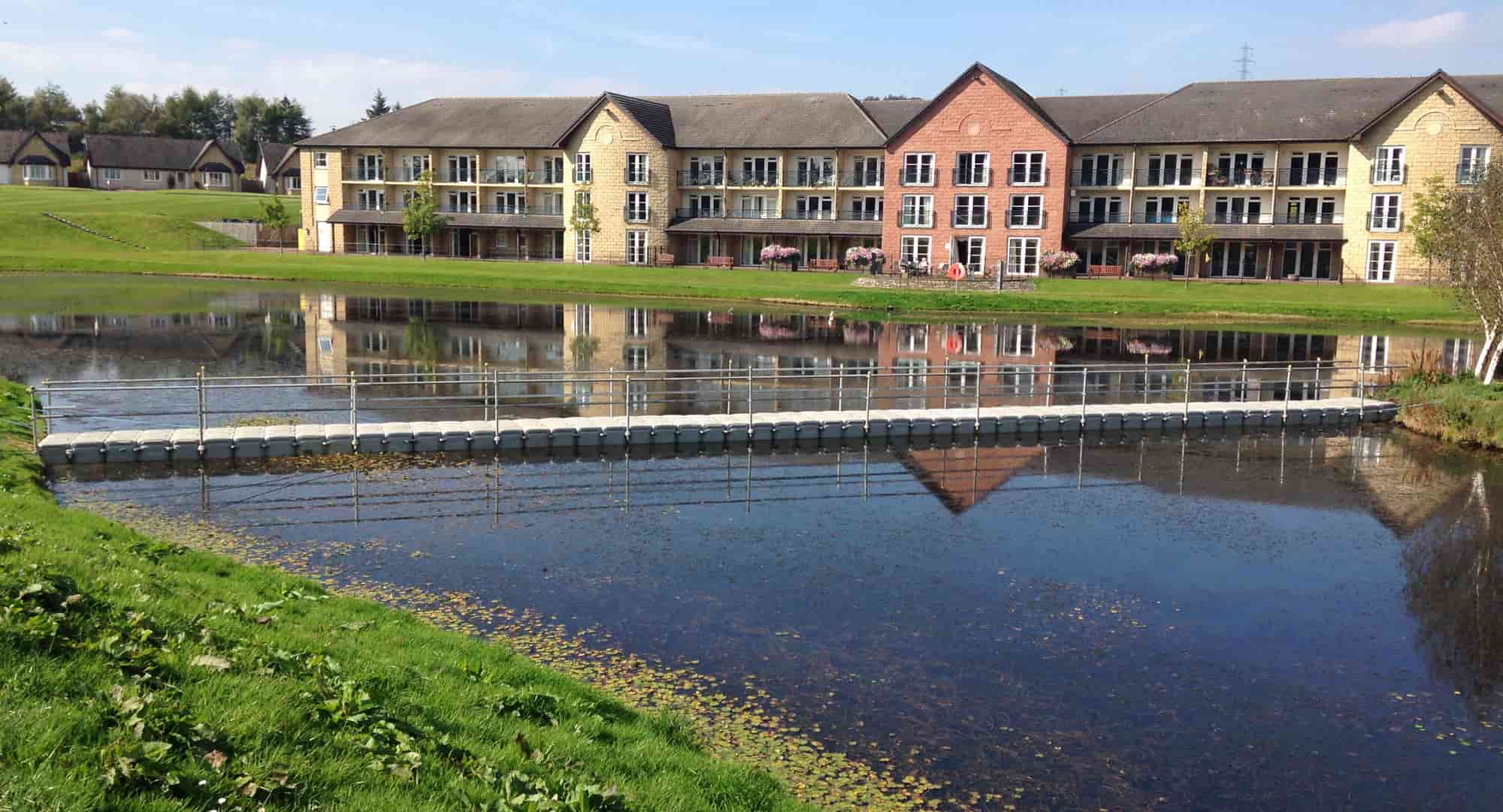
Our systems can create temporary pedestrian routes, workforce access, towpath diversions and working crossings across canals, rivers, lakes, reservoirs, wetlands and other water environments.
The width, length and configuration can be adapted around the site, intended users, required loads and water conditions, with edge protection and additional access equipment incorporated where required.
For public and private event pedestrian routes, see our Event Pedestrian Walkways page.
Modular Floating Walkways & Temporary Pontoon Bridges
Floating walkways provide a practical way to create temporary access where a permanent bridge, path or bankside route is unavailable, restricted or out of service.
Typical applications include:
- Construction and maintenance access
- Canal towpath diversions
- Temporary pedestrian crossings
- Workforce access to islands and restricted banks
- Access for bridge and culvert works
- Reservoir and pump-tower access
- Wetland and marsh access
- Temporary routes around damaged or closed infrastructure
- Suitable small plant, tools and materials where the loading has been assessed
The final arrangement is planned around the span, width, users, loads, water conditions and site access requirements.
Floating walkways can create a temporary route across or alongside water where conventional land access is unavailable, restricted or impractical.
The system can be configured around the required route, working area, shoreline and site constraints to provide practical access for contractors and project teams.
Where sections of towpath are closed for maintenance, repair or other works, a modular pontoon walkway can provide a temporary diversion around the affected area where site conditions allow.
Width, edge protection, access transitions and the interaction with the waterway are considered during planning.
Floating walkways can provide temporary access for site operatives, engineers and other authorised users across water or to otherwise difficult-to-reach work areas.
Routes can be configured to suit the expected number of users, required width and access points, with suitable edge protection incorporated into the design.
Where required, the walkway or bridge can be designed to accommodate suitable tools, materials and small plant in addition to pedestrian access.
Proposed equipment and working loads must be reviewed during planning so the pontoon width, buoyancy, deck arrangement and access transitions are appropriate for the intended use.
Appropriate edge protection can be incorporated along the floating route to suit the project and intended users.
Handrails, gates and other edge-protection arrangements are selected as part of the overall access design rather than treated as an afterthought.
Modular floating access can be particularly useful where steep banks, soft ground, wetlands, marshes or water separate the work area from a suitable access point.
Walkways can provide a temporary route to islands, bridge piers, reservoir structures and other locations that may be difficult to reach using conventional land-based access.
Floating walkways are often used as part of a wider access solution for bridge, culvert, reservoir and water-infrastructure projects.
They can link the bank to a working platform, scaffold access area, pier, pump tower or other structure so operatives and equipment can reach the workface safely and efficiently.
Where an existing path, footbridge or access route is damaged, washed out or temporarily unavailable, a modular pontoon bridge may provide an interim crossing while permanent works are planned or completed.
Suitability depends on the span, users, required loads, water conditions and available access, all of which need to be assessed before installation.
The walkway can be assembled at the required location or, where access is restricted, components can be carried to a suitable launch area and the system assembled in sections.
Positioning and restraint may use suitable ropes, anchors, spud arrangements or other project-specific methods depending on the waterway and the temporary works requirements.
The intended users, width, span, freeboard, equipment loads and water conditions all influence the final pontoon arrangement.
Where the crossing carries plant, supports a more complex access system or has particular stability requirements, FPS can support the project with temporary works design and stability calculations.
Every temporary water crossing is different, so the arrangement is planned around the actual site and use.
We consider factors including:
- Required route, length and width
- Pedestrian numbers and intended users
- Tools, materials and plant loads
- Water depth, flow and changing levels
- Bank conditions and access transitions
- Edge protection requirements
- Navigation and waterway constraints
- Installation, hire and removal programme
FPS provides a complete service from planning through to mobilisation and demobilisation.
Our team can deliver the modular pontoon system, assemble and secure the required walkway or crossing, install agreed edge protection and return to dismantle and remove the system at the end of the hire.
Our service can include modular floating walkway hire, temporary pontoon bridges, UK-wide delivery, installation and removal, edge protection, access transitions, work and safety boat support and temporary works input where required.
Floating Walkway Uses…
- Floating construction work access
- Canal towpath pedestrian diversions
- Temporary works access
- Tree felling and landscaping on islands
- Pedestrian walkways at events
- Beach access
And There’s More…
- Wetland and marsh access
- Bridge access
- Culvert repair and clearance access
- Access to support scaffold erection
- Access to pier legs
- Reservoir pump-tower access
Frequently asked questions
What is a pontoon walkway used for?
Pontoon walkways give temporary access across water for construction and maintenance, canal towpath diversions, pedestrian crossings, and workforce access to islands, restricted banks, wetlands, culverts and reservoir towers.
How wide and long can a temporary pontoon walkway be?
Width, length and layout are set for each project. They depend on the users, the loads, the span and the water conditions.
Do pontoon walkways have handrails?
Yes, where required. Handrails, gates and edge protection are chosen as part of the overall access design.
Can small plant or materials cross a pontoon walkway?
Suitable small plant, tools and materials can be carried once the loading has been assessed. Temporary works design and stability calculations are available for more complex projects.
Walkways can be supplied with pontoon gangways and ramps and edge protection for floating platforms. For urgent crossings, see emergency response pontoon hire.
Discuss Your Floating Walkway or Bridge Project
Need a temporary floating walkway, workforce crossing or pontoon bridge? Tell us the required route, length and width, expected users, access points, water conditions and programme and we can review a suitable modular arrangement.
Call 01253 921 352 or request a quote online.