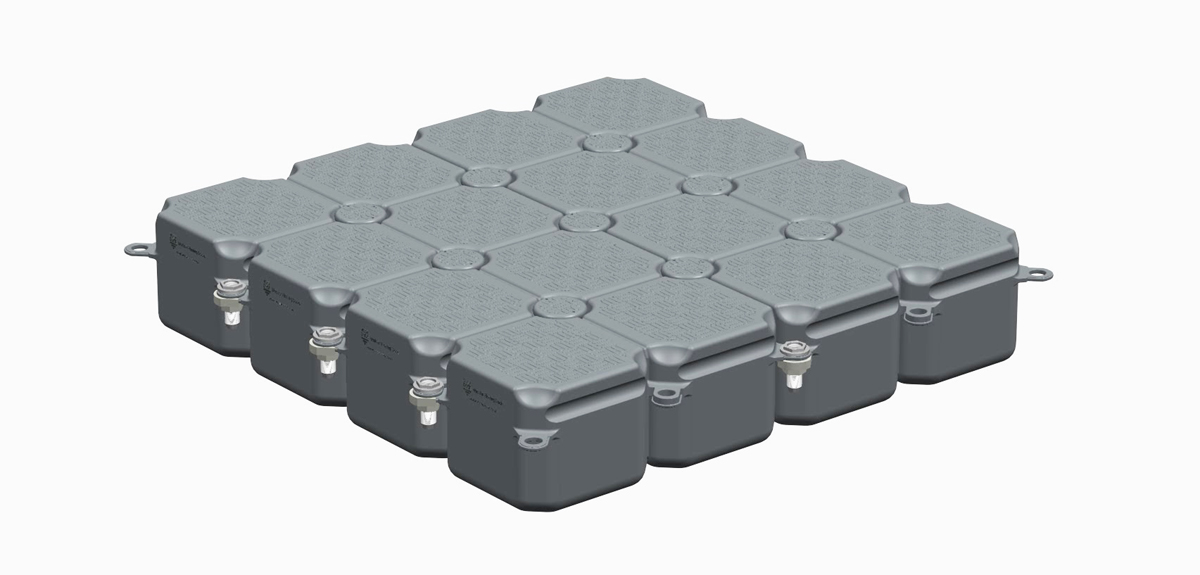
Plastic Pontoon Floats & Modular Components
Plastic pontoon floats used in FPS modular hire systems across the UK, with component dimensions, connection options and guidance on complete platform configurations.
How the FPS Modular Pontoon System Works
FPS Pontoon Hire uses a modular floating pontoon system that can be configured around the access, working-area and site requirements of each project.
Full-height and low-profile floats can be combined to create floating work platforms, temporary walkways, scaffold bases, inspection platforms and other project-specific layouts. Connection hardware, edge-protection interfaces, access equipment and restraint arrangements are then incorporated as required for the complete installation.
Typical single-height working load: 175 kg/m², evenly distributed.
A single-height platform reaches approximately 350 kg/m² at full immersion, so FPS uses 50% of that figure as the typical working load to retain freeboard and provide a clear safety margin. Point loads and specialist equipment are assessed separately.
This page explains the components used within our hire systems. If you require individual floats or components separately, contact us so availability and the proposed use can be reviewed.
For more complex installations, FPS can also support the project with temporary works and stability calculations where required.
Modular Pontoon Components
Double Full-Height Float
The double full-height float provides a larger modular component that helps create efficient platform layouts and larger working areas.
Typical dimensions: 966 mm × 483 mm × 390 mm
Typical weight: 11.5 kg
Single Full-Height Float
The single full-height float provides additional flexibility around platform edges, changes in width and project-specific layouts.
Typical dimensions: 483 mm × 483 mm × 390 mm
Typical weight: 6.5 kg
Component details should be confirmed against the equipment being supplied for the specific project.
Low-profile floats can be used where reduced freeboard is beneficial, including applications requiring easier access to the waterline.
Double Low-Profile Float
Typical dimensions: 966 mm × 483 mm × 230 mm
Typical weight: 11.5 kg
Single Low-Profile Float
Typical dimensions: 483 mm × 483 mm × 230 mm
Typical weight: 6.5 kg
Low-profile arrangements can be useful for swimming, rowing, canoeing, sporting-event access and specialist waterside work. Final suitability depends on the complete platform layout, loading and site conditions.
The floats form only one part of the complete pontoon system. Connection hardware is used to secure adjoining modules and build them into the required platform or walkway configuration.
The number and arrangement of connections depend on the platform geometry, intended use and assembly method. FPS supplies the required connection components as part of the agreed pontoon installation or hire scope.
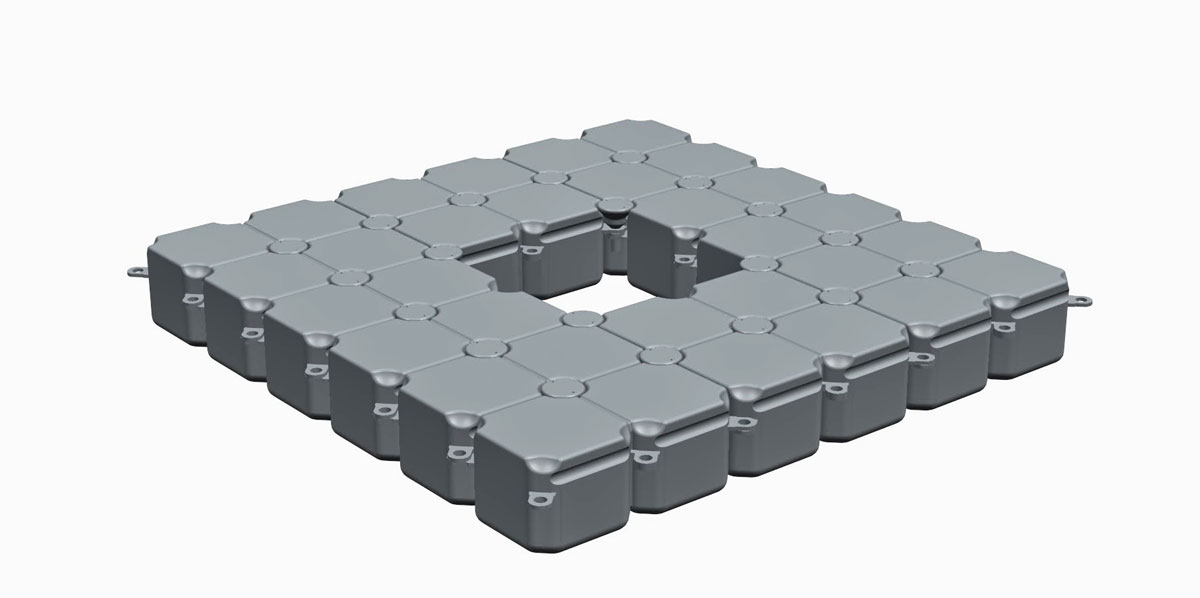
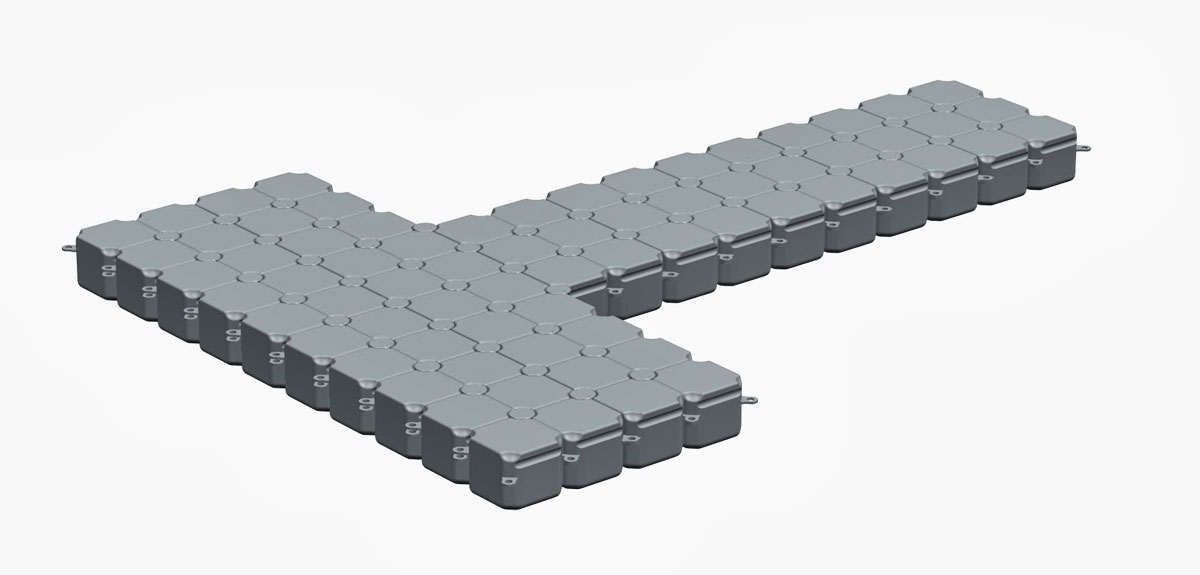
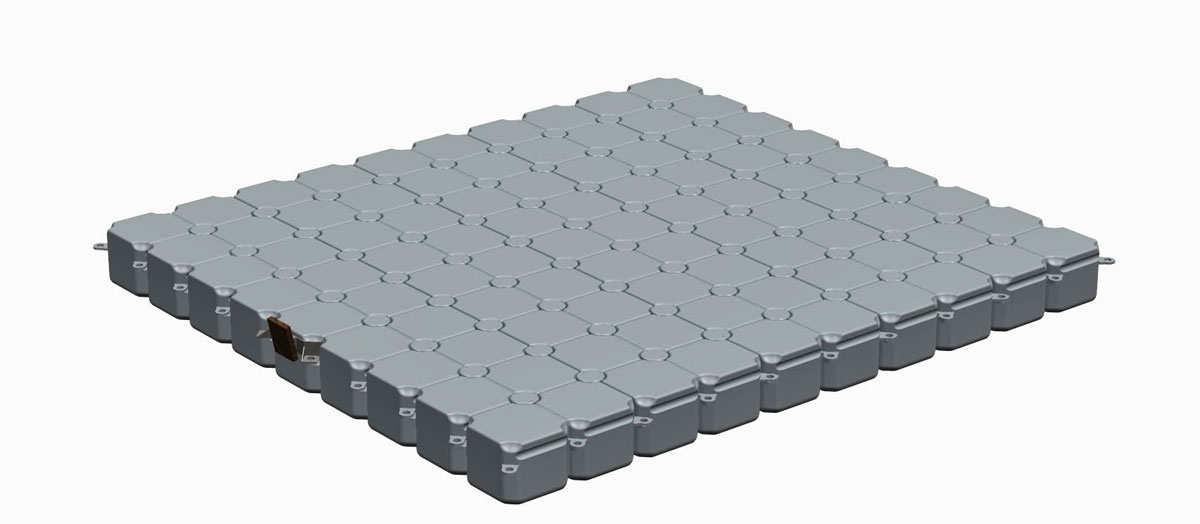
FPS pontoons are not limited to a single standard platform size. The modular system can be configured into square and rectangular platforms, long walkways, T-shaped arrangements, working areas around structures and other project-specific layouts.
The correct arrangement depends on the required working area, access route, water depth, intended activity, loads, freeboard and positioning requirements.
See our Commercial Pontoon Hire services for examples of project applications.
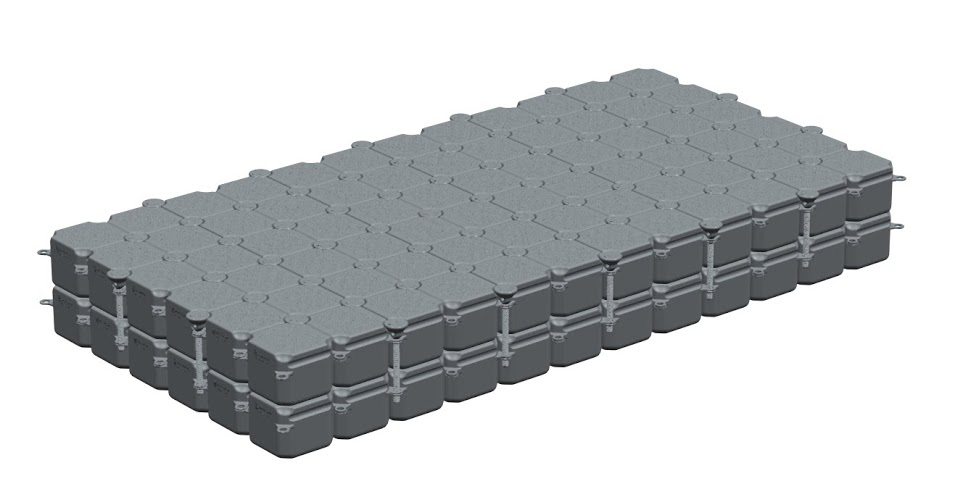
Where a project requires additional buoyancy or load capacity, the pontoon configuration can be adapted by increasing the platform footprint, adding pontoon layers or using a combination of measures.
A typical single-height platform is normally rated by FPS at 175 kg/m² working load when evenly distributed. A single-height platform reaches approximately 350 kg/m² at full immersion, so the typical working load is set at 50% of that figure to retain freeboard and a clear safety margin.
Additional layers can increase buoyancy and available capacity, but the allowable working load does not automatically double. Multi-layer and non-standard configurations must be assessed for the complete loading case, freeboard, stability, connections, load distribution and site conditions.
Platform size alone does not determine whether a pontoon arrangement is suitable. Personnel, equipment, concentrated loads, scaffold structures, water conditions and load distribution must all be considered.
The square-metre working load applies to evenly distributed loading. Plant, scaffold legs, wheels, outriggers and other point loads may require load spreading or a project-specific assessment.
For higher loads, unusual layouts or more complex installations, FPS can provide project-specific temporary works support and stability calculations where required.
Learn more about our Temporary Works & Stability Calculations.
The modular platform can be configured to interface with handrails, mesh edge protection, gates, ladders, ramps and other access arrangements required by the project.
These items are selected around the work activity, access points and site-specific risk controls.
See Pontoon Edge Protection Systems for more detail.
The same modular components can be configured for different applications, including floating work platforms, temporary pedestrian access and bases for scaffold towers where the overall arrangement is suitable.
Related services include Floating Work Platforms and Floating Walkways & Bridges.
A complete pontoon system also needs an appropriate method of positioning and restraint. The arrangement depends on water depth, flow, available fixing points, operating area and whether the platform needs to remain fixed or be repositioned during the works.
These requirements are considered as part of the overall project planning rather than as separate components in isolation.
The main advantage of the FPS modular system is flexibility. Rather than asking customers to design a platform from individual floats, we can review the required access, working area, loads and site constraints and configure a complete pontoon system around the job.
Additional equipment such as life jackets, edge protection, access equipment and boat support can also be incorporated where required. See our Pontoon & Marine Equipment Hire page.
Discuss Your Pontoon Configuration
Tell us the site location, required working area, intended use, personnel and equipment loads, water conditions and access restrictions.
FPS Pontoon Hire can recommend a suitable modular arrangement and provide delivery, installation, hire and collection throughout the UK.
Call 01253 921 352 or contact FPS Pontoon Hire to discuss your project.